The Forbes Health editorial team is independent and objective. To help support our reporting work, and to continue our ability to provide this content for free to our readers, we receive compensation from the companies that advertise on the Forbes Health site. This compensation comes from two main sources. First, we provide paid placements to advertisers to present their offers. The compensation we receive for those placements affects how and where advertisers’ offers appear on the site. This site does not include all companies or products available within the market. Second, we also include links to advertisers’ offers in some of our articles; these “affiliate links” may generate income for our site when you click on them.
The compensation we receive from advertisers does not influence the recommendations or advice our editorial team provides in our articles or otherwise impact any of the editorial content on Forbes Health. While we work hard to provide accurate and up-to-date information that we think you will find relevant, Forbes Health does not and cannot guarantee that any information provided is complete and makes no representations or warranties in connection thereto, nor to the accuracy or applicability thereof. Life With Hearing Aids
Hearing loss affects more than 1.5 billion people worldwide, according to the World Health Organization[1]World Report on Hearing . World Health Organization. Accessed 1/3/2023. . However, perceived stigma regarding hearing aid use prevents many people from trying these helpful devices. Fortunately, for those with mild to moderate hearing loss, invisible hearing aids are an aesthetically subtle solution that make it easier to communicate with others and stay engaged in daily life.
To determine the best invisible hearing aids available, the Forbes Health editorial team consulted several audiologists from the Forbes Health Advisory Board for product recommendations based on their expertise. Star ratings were solely determined by the editorial team and are based on starting prices, average user ratings and product features that are typically important to hearing aid users. Read on to find out which hearing aids made our list.
Note: Product prices are accurate as of the publication date.
The Starkey Evolv AI hearing aid is one of the smallest custom-made invisible hearing aids on the market, according to Abigail Friend, Au.D., a Washington-based, board-certified audiologist and Forbes Health Advisory Board member. “Starkey is known for being able to accommodate difficult anatomy with custom products,” she adds, as this style of hearing aid is custom molded for the wearer’s unique ear shape. What’s more, this hearing aid makes 55 million automatic sound adjustments per hour and provides an additional 40% reduction in noise energy compared to the brand’s previous technology, helping reduce a user’s listening effort, according to the company.
Read our full review of Starkey hearing aids here.
“The new Oticon OWN [hearing aid] features BrainHearing technology and an on-board Deep Neural Network, providing fantastic sound quality and reducing listening effort for [people with] mild to severe hearing loss,” says Amy Sarow, Au.D., a Michigan-based board-certified audiologist and Forbes Health Advisory Board member. “The fit of this hearing aid is invisible for nine out of 10 users,” she adds.
Available in five technology levels and five color options, experts agree that the Oticon OWN is a discreet option supported by powerful technology. It’s the smallest hearing aid model Oticon currently offers.
Read our full review of Oticon hearing aids here.
Dr. Friend recommends the Signia Silk X hearing aid because it’s one of the smallest hearing aids on the market, making it particularly appealing for those wanting the “not even there” aesthetic. What’s more, it can be instantly fitted to the wearer’s ear, shortening the wait time typically required of custom-molded hearing products. Users can also customize their volume settings via an accompanying app.
“Signia has a fantastic, ready-to-wear product with great sound quality,” reiterates Dr. Sarow. “The Signia Silk X offers wireless binaural processing to deliver clear sound and enhanced speech understanding.”
Read our full review of Signia hearing aids here.
The Phonak Lyric is the only hearing aid on our list that’s designed to be worn 24 hours a day, seven days a week and for months at a time. Available via a subscription model, this hearing aid is professionally inserted into the wearer’s ear every two to three months, explains Dr. Friend. “It’s 100% invisible, and users can exercise, sleep and even shower with the devices in,” she says.
“The Phonak Lyric offers a comfortable fit with medical-grade foam, as well as fantastic sound quality and the convenience of 24-hour amplification,” adds Dr. Sarow. “Lyric hearing aids offer the freedom to hear and go about life normally while still being able to hear comfortably all day long. Patients love the convenience of this hearing aid.”
Read our full review of Phonak hearing aids here.
The titanium material used for these Phonak hearing aids is unique to the hearing aid market, says Dr. Friend. “The shell can be made 50% thinner than acrylic material and yet 15 times stronger,” she explains.
“Despite its tiny size, this hearing aid is thinner than its acrylic cousins and can fit a telecoil inside to allow streaming through a neckloop,” adds Dr. Sarow. “The AutoSense processing from Phonak is one of the best automatic technologies to support listening—even in challenging environments.”
While Dr. Sarow says the VirtoP-Titanium is a great discreet hearing aid option, one’s ear canal geometry is an important factor to consider for this type of hearing aid. “Those with very narrow or curved ear canals won’t be able to wear the [invisible-in-canal] (IIC) model,” she says.
Read our full review of Phonak hearing aids.
To determine the best invisible hearing aids available, Forbes Health’s editorial team consulted audiologists on the Forbes Health Advisory Board for specific product recommendations based on their years of experience fitting various hearing aid models for a wide array of patients. Each expert was careful to consider the newest technology available when providing their recommendations, as well as newer brands and their roles in the evolving industry.
Star ratings were solely determined by the editorial team and based on factors including the starting price of a pair of hearing aids, the average user rating of each hearing aid and the inclusion of product features that are typically important to hearing aid users.
Starting price and user rating information are reflected from HearingTracker.com (when available). Hearing aid models also earned points for having both rechargeable and disposable battery options, Bluetooth compatibility, hands-free calling and a large number of color choices. All selected hearing aids can be fitted and serviced by audiologists, and the best over-the-counter options can be self-fitted.
Read more about our hearing aids review methodology.
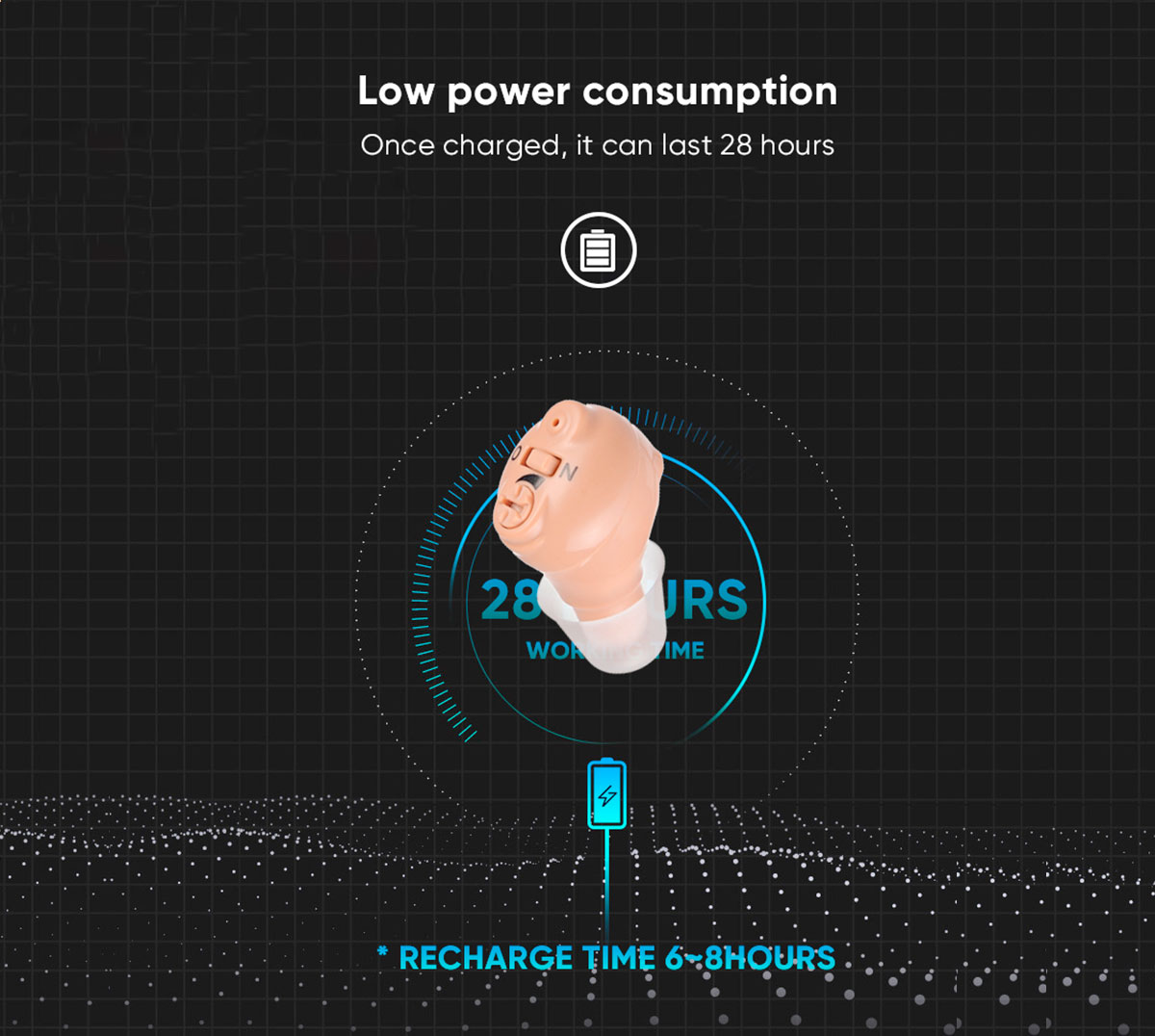
An invisible hearing aid, also referred to as an invisible-in-canal (IIC) hearing aid, is a style of hearing aid that fits entirely in the ear canal. The smallest hearing aid type available, IIC hearing aids sit deep enough in the ear canal so that they’re largely undetectable by anyone looking at the person wearing the hearing aids. Due to the way they’re worn, these hearing aids are custom-fitted to the wearer’s ear canal, and they don’t feature any external tubes and wires.
Most of the top hearing aid manufacturers offer at least one invisible hearing aid model.
Invisible hearing aids require five elements to function:
An invisible hearing aid houses each of these components in a tiny plastic shell that can fit comfortably inside the ear canal so the device remains virtually undetectable. Due to these size limitations, invisible hearing aids often lack features that other models may include, such as Bluetooth compatibility.
Invisible hearing aids tend to work well for people with mild to moderate hearing loss, although some models can support those with severe hearing loss as well. People who are particularly concerned about the aesthetic of hearing aids or perceived social stigma associated with wearing hearing aids tend to fare better with IIC models than other bulkier, more noticeable hearing aid styles. They also tend to be well suited for people with sound sensitivities who are more focused on listening clarity provided by higher-quality hearing technology than access to lots of extra features.
There are several factors worth considering when shopping for invisible hearing aids, such as:
The fit. Since most invisible hearing aids must be custom fitted, it’s crucial to work with a trusted audiologist to determine which models will best suit the shape of your ear canal and to carefully complete your earmold impression.
The technology. Hearing aids come in a variety of technology levels to best address varying degrees and types of hearing loss. Based on your diagnosis, speak with your audiologist about what technology (and accompanying hearing aid) could improve your overall hearing experience.
The battery. Most invisible hearing aids use disposable hearing aid batteries, so if a rechargeable option is important to you, that specification will likely narrow your options.
The aesthetic. While all IIC hearing aids are designed to be the least noticeable of all hearing aid styles, some are more visible than others. When working with your audiologist, consider a number of models (and the colors available) to see which option looks most discreet in your ear.
The price. Prescription hearing aids are often expensive, so share your financial limitations with your audiologist so they can specifically recommend invisible hearing aids available within your price range or with a payment plan option.
Invisible-in-canal (IIC) hearing aids tend to be the most invisible style of hearing aid, as they are the smallest in size and sit deep in the ear canal without any external tubes or components.
Yes, invisible hearing aids can be effective tools for a person experiencing mild to moderate hearing loss—depending on the specifics of their diagnosis and what they hope to gain from wearing hearing aids.
The average out-of-pocket cost for a pair of invisible hearing aids ranges from $3,000 to $7,600, depending on the level of technology used, the wearer’s geographic location, whether audiology services and warranties are bundled into product pricing and more.
Best Hearing Aids Best Bluetooth Hearing Aids Best Hearing Aid Batteries The Actual Cost Of Hearing Aids Does Medicare Cover Hearing Aids? Different Types And Styles Of Hearing Aids
Information provided on Forbes Health is for educational purposes only. Your health and wellness is unique to you, and the products and services we review may not be right for your circumstances. We do not offer individual medical advice, diagnosis or treatment plans. For personal advice, please consult with a medical professional.
Forbes Health adheres to strict editorial integrity standards. To the best of our knowledge, all content is accurate as of the date posted, though offers contained herein may no longer be available. The opinions expressed are the author’s alone and have not been provided, approved or otherwise endorsed by our advertisers.
Alena is a professional writer, editor and manager with a lifelong passion for helping others live well. She is also a registered yoga teacher (RYT-200) and a functional medicine certified health coach. She brings more than a decade of media experience to Forbes Health, with a keen focus on building content strategy, ensuring top content quality and empowering readers to make the best health and wellness decisions for themselves.
Hearing Aids With Bluetooth Lindsey Banks is a Florida-licensed audiologist and fellow of the American Academy of Audiology. She currently provides tinnitus and hearing loss support for patients online at Dr. Hearing Loss. She previously managed other audiologists at Center for Sight, a large ophthalmology-owned private practice, and provided patient care through hearing diagnostic testing, hearing aid fittings and tinnitus counseling. Banks also previously served as an audiology extern for the Charlie Norwood VA Medical Center and a clinical and dispensing audiologist and tinnitus specialist for ENT Hearing Associates of South Florida. She spent six years helping grow EverydayHearing.com as a medical reviewer and consultant as well.